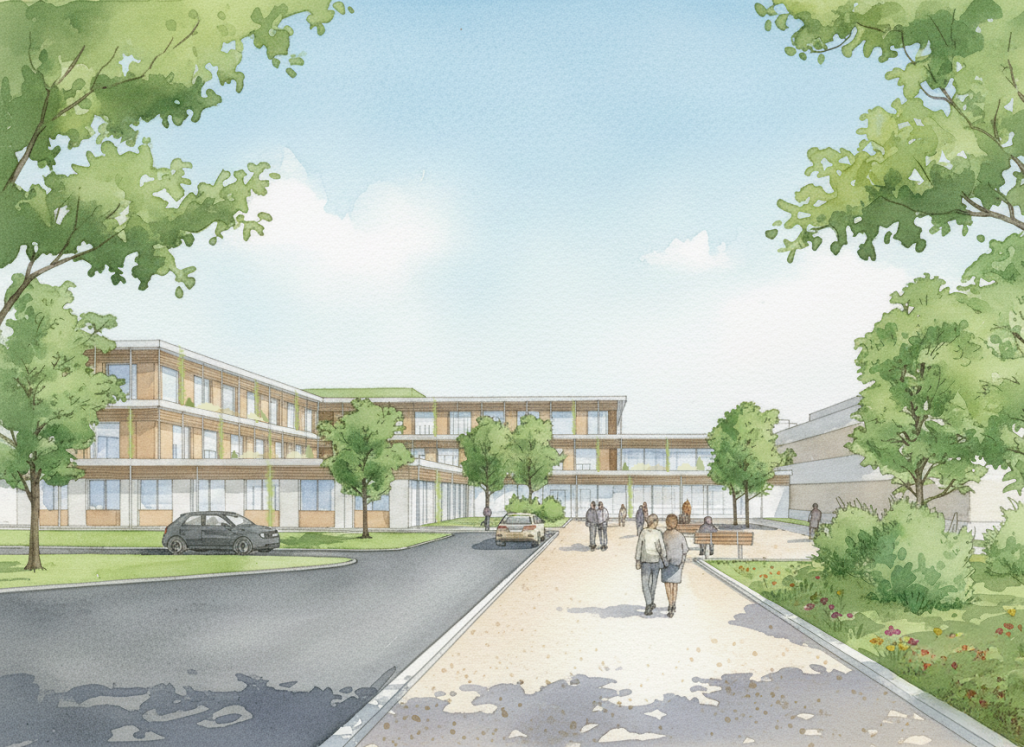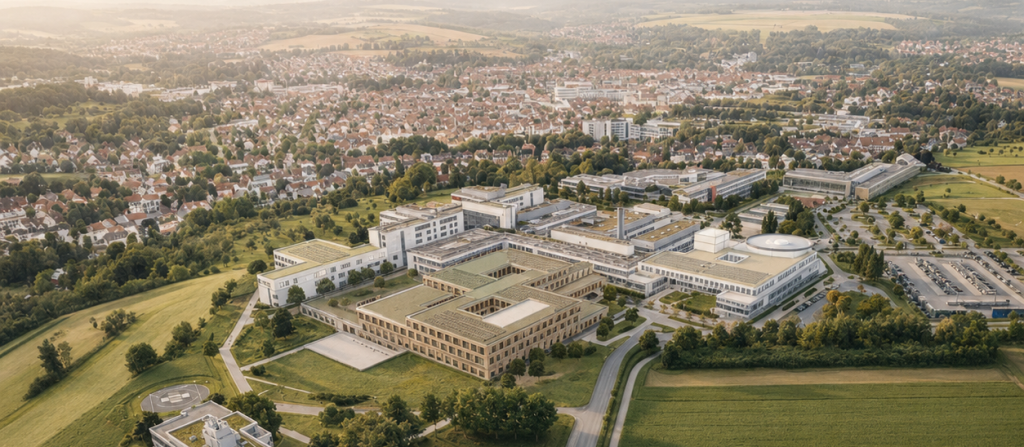
Our design builds on the existing structure of medius KLINIK Nürtingen and develops it into a high-performing, future-ready healthcare campus. The typology of the new hospital complex, developed since 2010, was largely shaped by the building site available at the time and by the initial need to retain the existing hospital building.
Location: Nürtingen, Germany
Status: In planning
Client: medius KLINIK Nürtingen
Visualization: Image 1 (cover image) was created using AI.
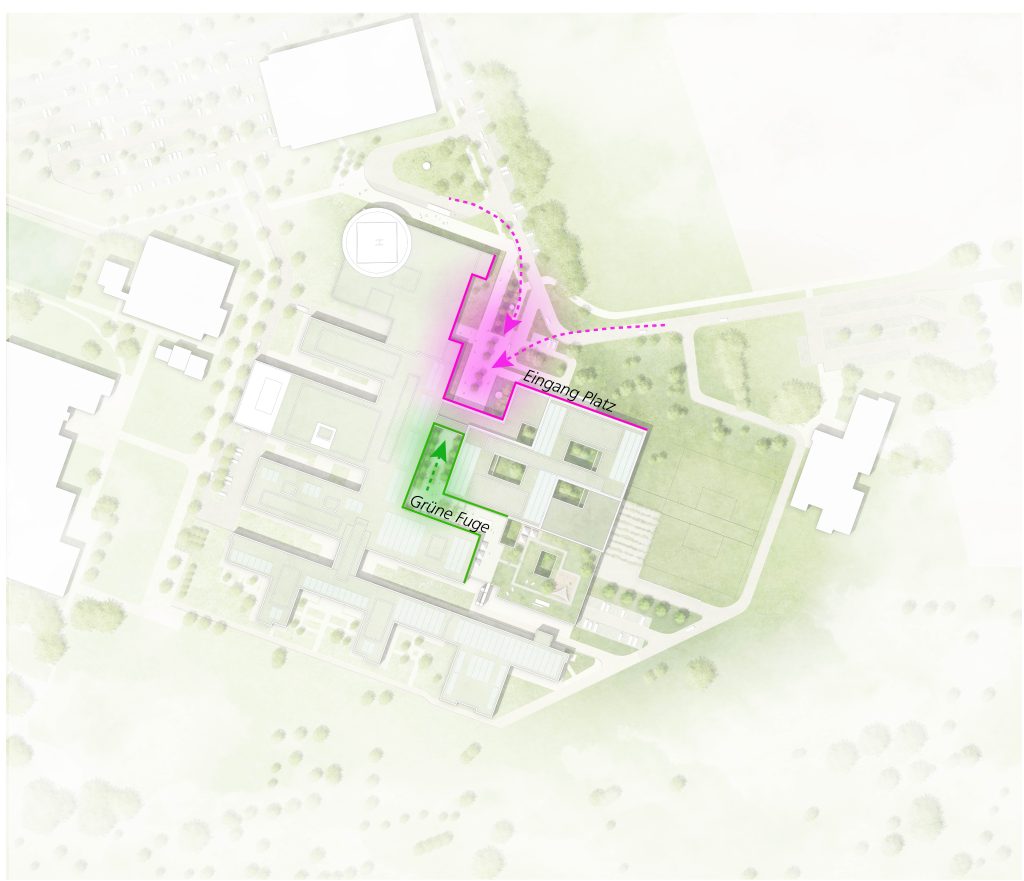
Diagrams: Images 2 and 3 (diagrams) were created by Nickl & Partner.
However, the L-shaped extension around the existing building resulted in a long access route and a highly elongated internal patient circulation spine. With the most recent additions of the Emergency Department to the north and the BT-7 inpatient building to the southwest, these circulation routes have become even longer. Replacing the remaining existing building with a centrally positioned extension now creates the opportunity to fundamentally reorganize these structures. Inpatient and treatment areas are consolidated, circulation distances are significantly reduced, and functional connections are strengthened.
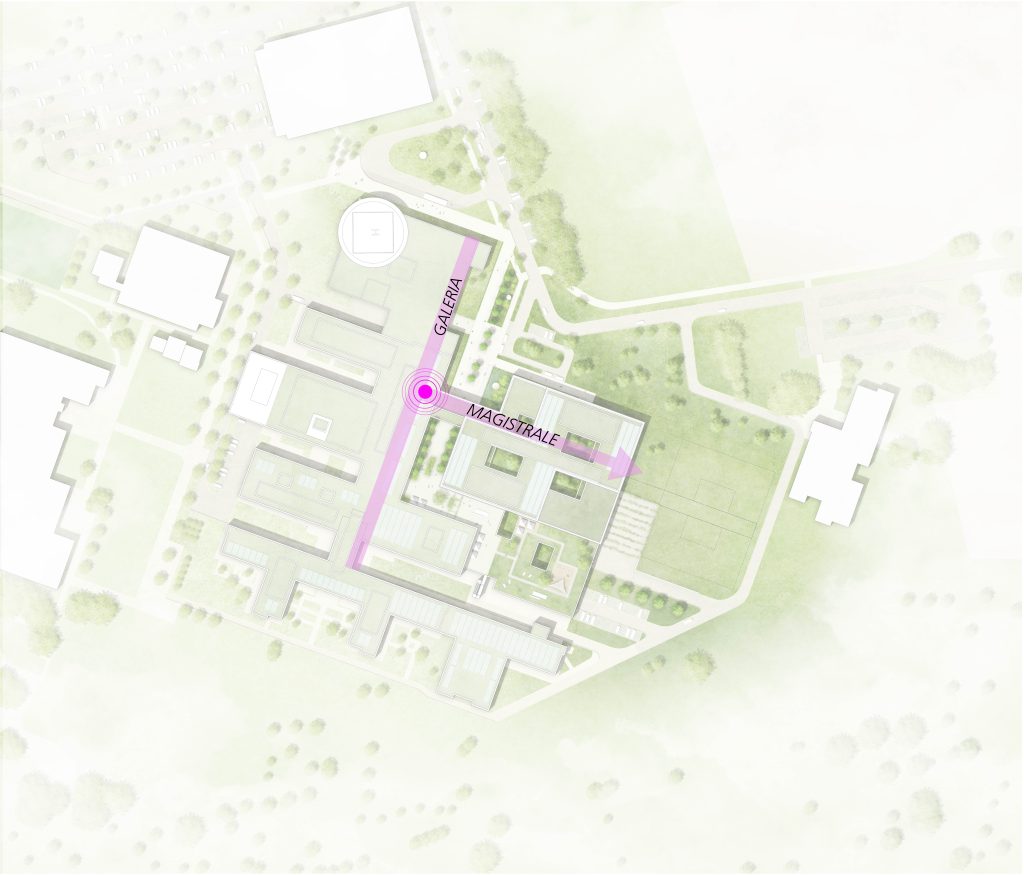
In addition to approximately 157 new general inpatient beds, further capacity is planned for intensive care, the Stroke Unit, and other medical specialties. This will increase the hospital’s overall bed capacity by around 42 percent. At the same time, existing functional areas such as operating theatres, radiology, and endoscopy will be selectively expanded and optimized.